On Lake LBJ, the Deed Doesn't Guarantee the Dock
October 1, 2026
October 1, 2026
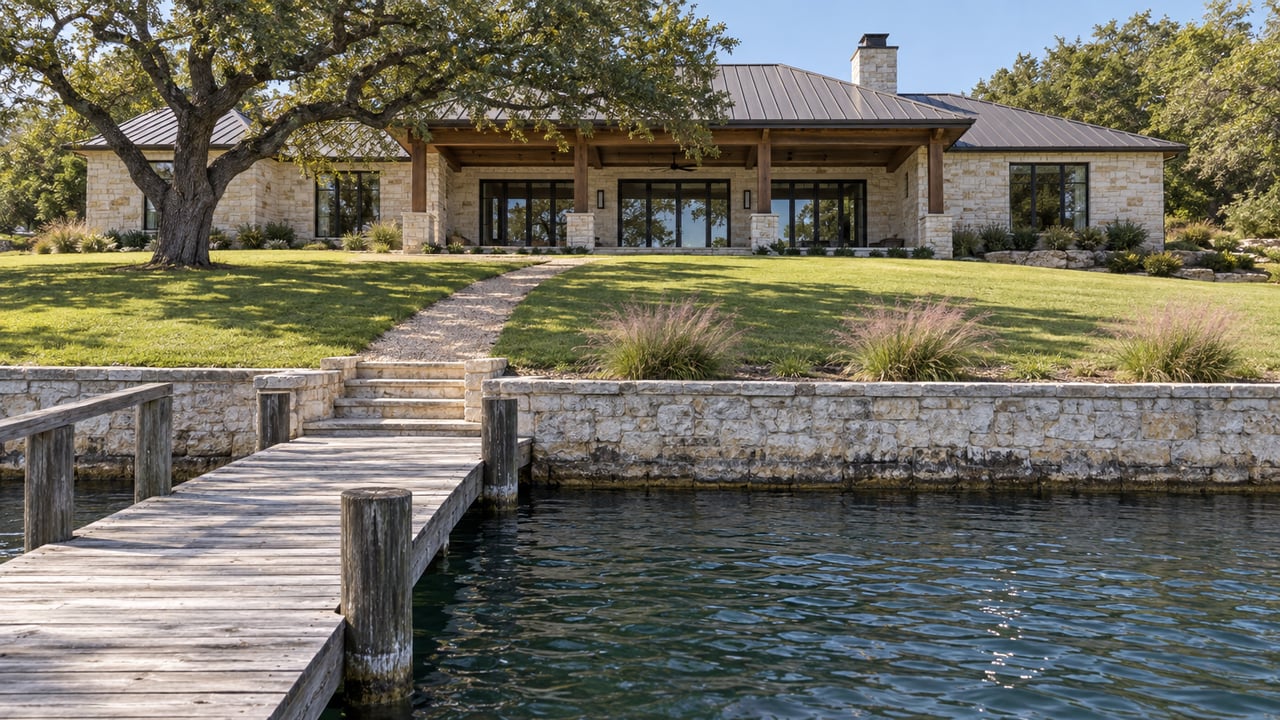
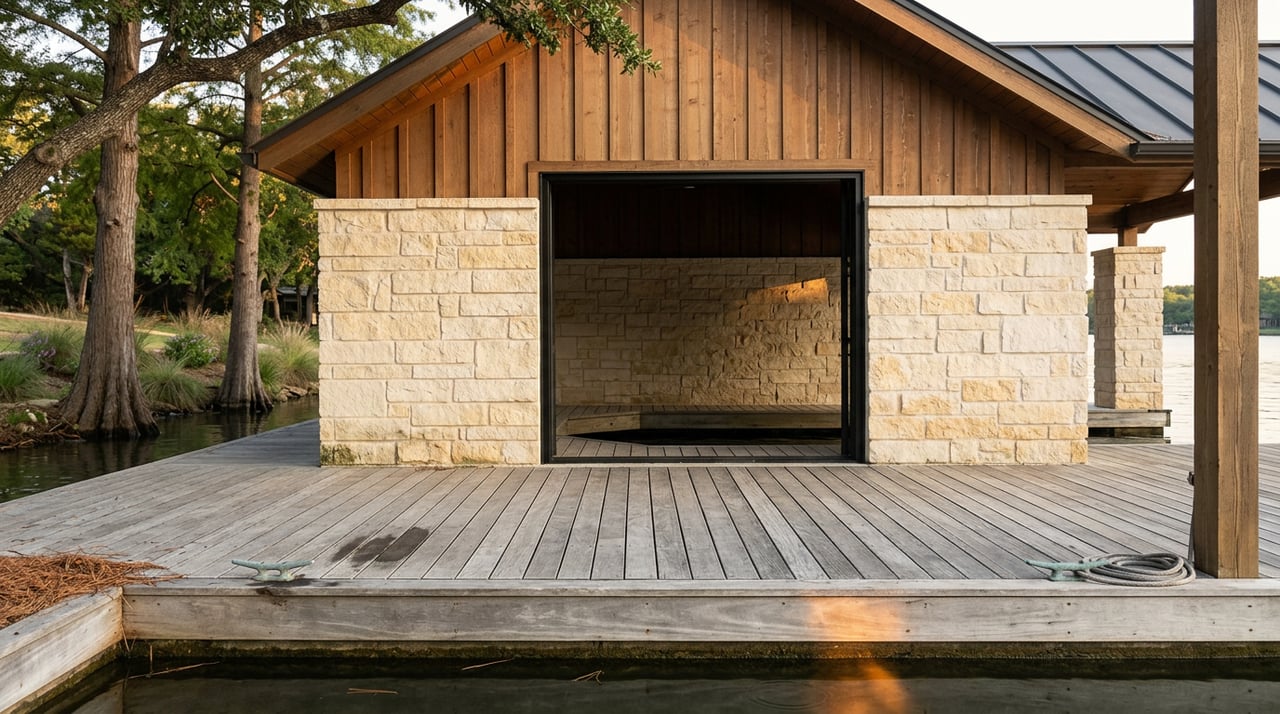
The showing usually goes the same way. Late afternoon, the water gone gold and still, a buyer walks the length of a covered slip and starts picturing weekends already lived there. The dock reads as settled fact, priced into the offer the way a kitchen island is priced into the offer. Nobody stops to ask whether the seller actually has the right to keep it there.
On Lake LBJ, that question is often the one that decides whether closing happens on schedule or slides by two weeks while title, a contractor, and sometimes the Lower Colorado River Authority sort out what the dock is actually worth to the deal.
Most Lake LBJ dock owners know one fact and stop there: residential docks of 1,500 square feet or smaller don't need an LCRA permit, registration, or fee. That threshold covers the overwhelming majority of what's built on this lake, and it's the reason so many sellers assume their dock sits outside any regulatory conversation entirely.
It doesn't. Every dock on the Highland Lakes, permitted or not, has to meet LCRA's Safety Standards for Residential Docks, covering flotation, lighting, anchoring, access, and how far it can sit from shore. The absence of a permit requirement isn't the absence of a rulebook. It just means the rulebook gets checked at the point of a complaint rather than at the point of construction.
Cross 1,500 square feet and the calculus changes completely. LCRA treats anything above that line as a marina facility, which pulls it under the Highland Lakes Marina Ordinance the board updated in May 2023. That update phased in new annual fees over two years, set a two-year deadline for marinas to replace unencapsulated foam flotation or sign a replacement agreement with LCRA, and closed the door on any new community marinas serving a neighborhood in place of individual docks. A seller with an oversized covered slip built years ago may be sitting on an ordinance obligation they've never heard of.
Here's the part that surprises even buyers who've done their homework. LCRA is explicit that lakefront ownership doesn't automatically come with dock rights. Fixed docks require ownership or permission to use the submerged land underneath them. Floating docks need the same permission for their anchor points. On stretches where the adjacent land is LCRA-owned, the property owner has to get sign-off from LCRA Real Estate Services before a dock can sit over it at all.
That distinction rarely surfaces during a casual showing. It surfaces during title work, when someone pulls the deed and the submerged-land question turns out to be unresolved, or during due diligence, when a buyer's agent requests the property's LCRA file and finds no record of the structure that's been sitting there for twenty years.
Older docks aren't automatically safe from this. LCRA can inspect a dock after a complaint and issue a notice of violation if it doesn't meet current safety standards, regardless of how long it's been in place. A structure can be entirely legitimate, grandfathered under an older set of rules, and still lack the paperwork to prove it. The dock isn't the risk. The absence of a documented answer is.
A standard home inspection stops at the shoreline. Dock framing, pilings, lift cables, marine electrical, and bulkhead condition all sit outside a general inspector's scope, which is why waterfront contracts on this lake routinely bring in a separate marine contractor to look at what the house inspector never touched.
That second inspection earns its cost fast. Bulkhead failure is the expense that catches waterfront buyers off guard most often, with full replacement running from the tens of thousands of dollars into six figures depending on age, material, and how far the erosion has already progressed behind the wall. A dock that looks cosmetically fine can still be resting on a bulkhead that's quietly failing a few feet below the waterline, and that's not a defect a walkthrough at golden hour is built to catch.
The fix isn't complicated. It's sequencing. A marine contractor evaluation, run alongside the general home inspection rather than after an offer's contingencies have already started burning off, gives both sides a real number before anyone's negotiating from a position of surprise.
LCRA sets the baseline for every lake it manages, but the shoreline towns ringing Lake LBJ layer their own requirements on top of it, and those layers don't match from one town to the next.
Highland Haven treats any dock, seawall, bulkhead, or boat ramp as major waterfront construction, which means permit review and supporting surveys before anything gets built. The city allows only one waterfront facility per lot, keeps structures out of a five-foot side setback, and caps extension at 50 feet from the seawall on open water. In tighter coves where the shore-to-shore distance runs under 150 feet, the city can also require a navigation-clearance survey before approving the work.
Horseshoe Bay runs on a different clock entirely. There, Architectural Committee approval has to clear before a building permit application can even be filed, a step that alone can add two to four weeks to the front end of the process, according to Craigen Marine, the Highland Lakes dock builder that manages permitting across multiple jurisdictions on this lake. Kingsland, Granite Shoals, and Sunrise Beach each carry their own variations on top of LCRA's baseline.
None of this shows up on a listing sheet. It shows up when a buyer wants to add a boat lift after closing and discovers the timeline runs closer to two months than two weeks, or when a seller who assumed their existing structure was compliant learns their town's rules are stricter than LCRA's floor.
The pattern across every one of these friction points is the same. The physical dock rarely causes the delay. The documentation behind it does. A buyer or seller who treats the paperwork with the same seriousness as the structure tends to close on schedule. Here's what that looks like in practice:
Lake LBJ's roughly 6,500 acres and nearly 60 miles of shoreline cross the Burnet-Llano county line, with towns on each side handling these questions a little differently, from Horseshoe Bay Resort anchoring the south end to Kingsland's Antlers Inn and AquaBoom celebration marking the north. The lake itself hasn't gotten more complicated. The number of authorities with a say in what happens at the waterline has.
A dock that comes with clean paperwork is worth exactly what it looks like. One that doesn't is worth what a buyer is willing to risk, and on a lake where that risk touches everything from LCRA to the city to the HOA, most buyers would rather not find out the hard way.
If you're weighing a purchase on Lake LBJ or getting a waterfront property ready to list, Jim Banks can walk through what the dock's paperwork actually says before it becomes a closing-week surprise. Let's connect.
Stay up to date on the latest real estate trends.




Ready to buy or sell in the Texas Hill Country? Connect with Jim Banks for expert guidance, strategic marketing, and results-driven representation tailored to your ranch or luxury property.